Blogs & Articles
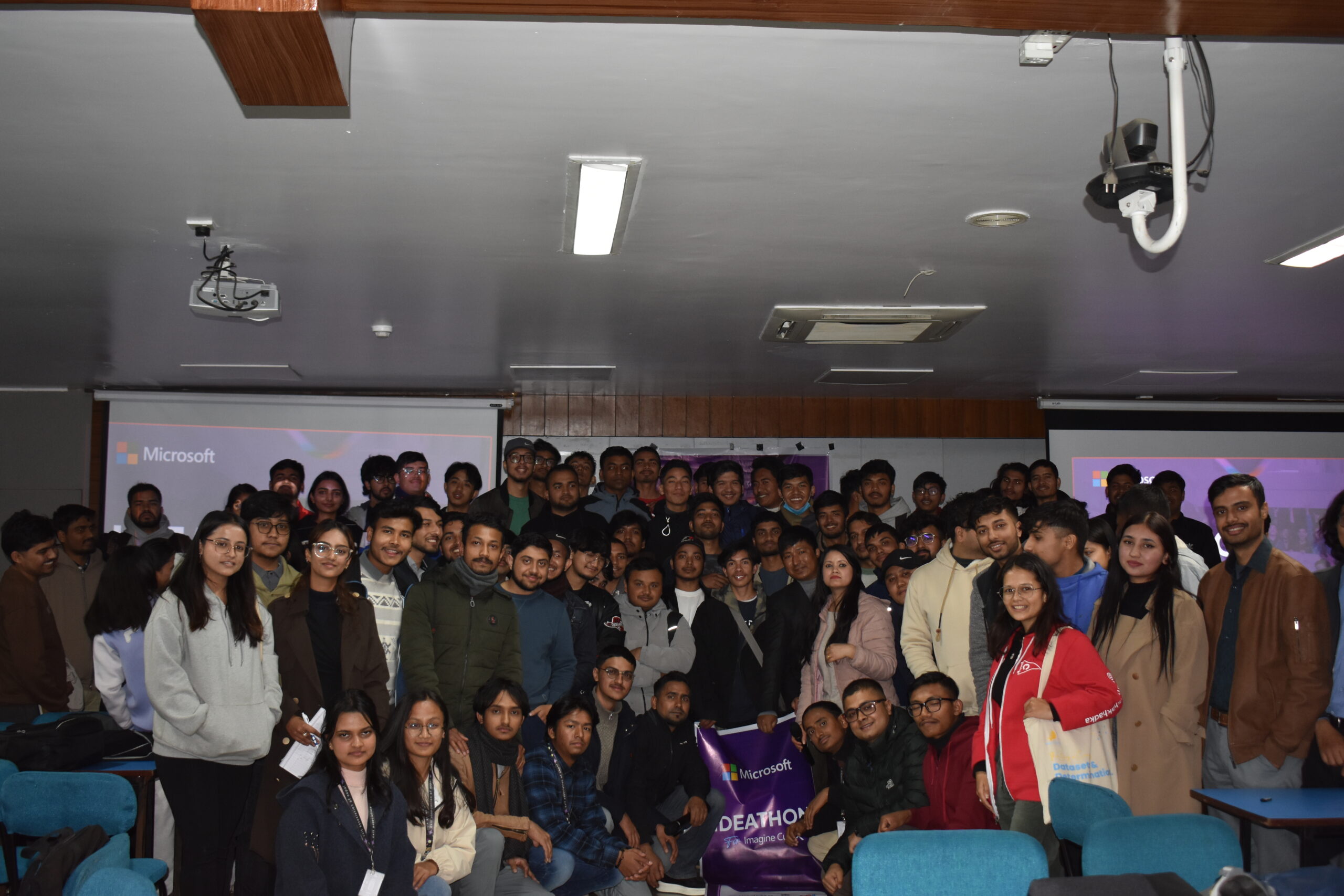
On 20 December 2025, The British College in Kathmandu turned into a buzzing hub of ideas, mentorship, and cloud-powered ambition. Nepal Cloud Professionals, alongside a Microsoft MVP, teamed up with CSIT Association of Nepal (CSITAN) and .NET Hub Nepal to host the Ideathon for Microsoft Imagine Cup 2026 — and if the energy in the room was any indication, Nepal’s next generation of tech talent is in great shape.
Over the course of an afternoon, 80 students didn’t just learn about the Microsoft Imagine Cup — a global competition with a 22-year legacy and nearly a million student participants worldwide — they got hands-on with the kind of structured thinking that turns a rough idea into a real, pitchable solution.
Setting the Stage
Registration kicked off right on time at 12:40 PM, smoothly handled by CSITAN volunteers who kept things moving all day. By 1:22 PM, mentors were seated and ready, giving students an early chance to start networking before anything official even began. A short refreshment break at 1:45 PM set a relaxed, collaborative tone, and by 2:00 PM, the real work started.
Learning Before Building
The day opened with a keynote from Mr. Pradeep Kandel, Microsoft MVP and System Engineer, who walked students through the Imagine Cup’s legacy and the idea of “problem-first innovation” — encouraging them to lead with the problem, not the technology, and to explore what Microsoft Azure and Azure for Students could offer along the way.
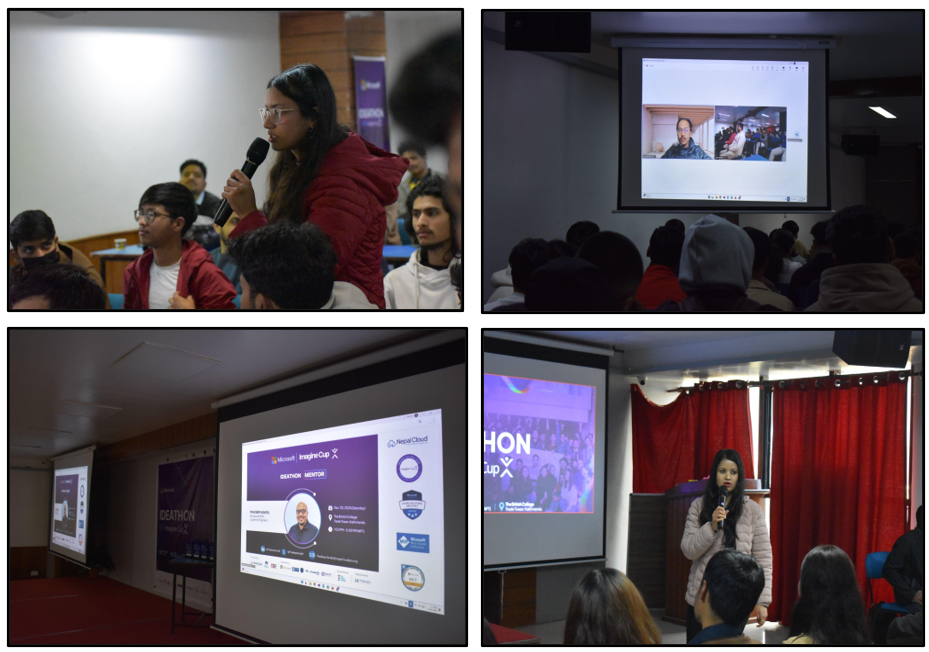
Mr. Bipin Bhandari followed with a candid look at what it’s actually like to compete in the Imagine Cup, emphasizing how much iteration matters and how a strong mentor relationship can shape a team’s direction.
Then came a dose of technical reality from Mr. Rijwan Ansari of VivaSoft Nepal, who broke down the fundamentals of Azure’s 200+ services and serverless computing, while also being upfront about the real challenges of building with AI — particularly around data privacy and compliance.
Finally, Ms. Satya Karki, Microsoft MVP, took the stage to run the main event: forming teams, structuring the brainstorm, and setting the stage for pitching.
The Ideathon Itself
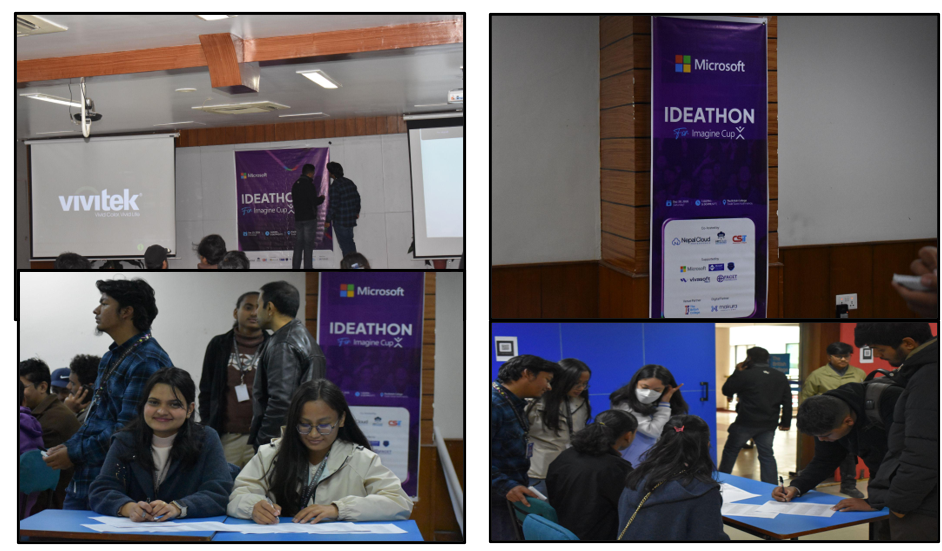
Students were split into 8 teams of 7–8 members each, grouped through a quick, informal numbering activity designed to mix people up and spark cross-disciplinary thinking. Nine experienced mentors circulated through the room, helping teams sharpen their problem statements, stress-test feasibility, and think through the right technology stack — with a natural lean toward Azure and AI.
Each team had 20 minutes to brainstorm and shape their idea, followed by a tight 5-minute pitch. Mentors gave feedback on the spot, right after each pitch — no waiting, no vague notes, just direct, useful input while the ideas were still fresh.
What Students Actually Built
The range of ideas said a lot about where students’ heads are at — genuinely thinking about problems that matter:
| Team | Idea |
|---|---|
| 8 Kages | AI-based medical prescription and disease tracking with personalized LLMs |
| Can’t Commit | AI-powered Government-to-Citizen service and infrastructure monitoring platform |
| Formula Six | Computer vision for precision agriculture and crop management |
| Biralo Gang | Voice-based AI guidance system for accessibility and support |
| Junkiri | Maternal health and baby care AI platform with personalized guidance |
| Chaos | AI-generated content detection system for digital integrity |
| Bad Gateway | AI-powered travel companion matchmaking platform |
| Imagineous | AI-based learning and support platform for autistic individuals |
| Always No.1 | AI-driven microfinance and loan risk analysis system |
From healthcare and accessibility to agriculture and financial inclusion, the pitches showed students weren’t just chasing “cool tech” — they were reaching for solutions with real social impact.
Handling the Hard Questions
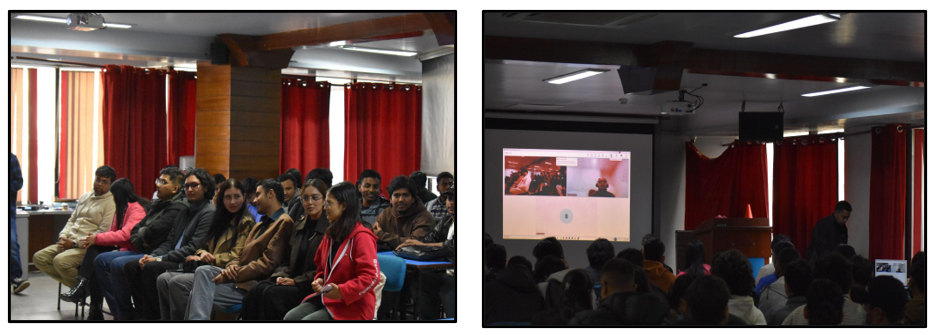
Not everything runs perfectly, and the team was upfront about it. The main hiccups were around virtual session connectivity and a wave of student questions about Azure access — things like student email limitations and credit card requirements for cloud services. Mr. Pradeep Kandel led a dedicated Q&A to work through these concerns directly, and the event kept its momentum without missing a beat.
Thank You, Team
None of this happens without people willing to show up and put in the work. Huge thanks to the CSITAN team — Ayusha Panta, Dikshya Thapa, Mandip Chaudhary, Rashmin Sharma, Sangam Luitel, Apekshya Basnet, and Pramoon Shrestha — who handled everything from outreach and registration to venue logistics and documentation.
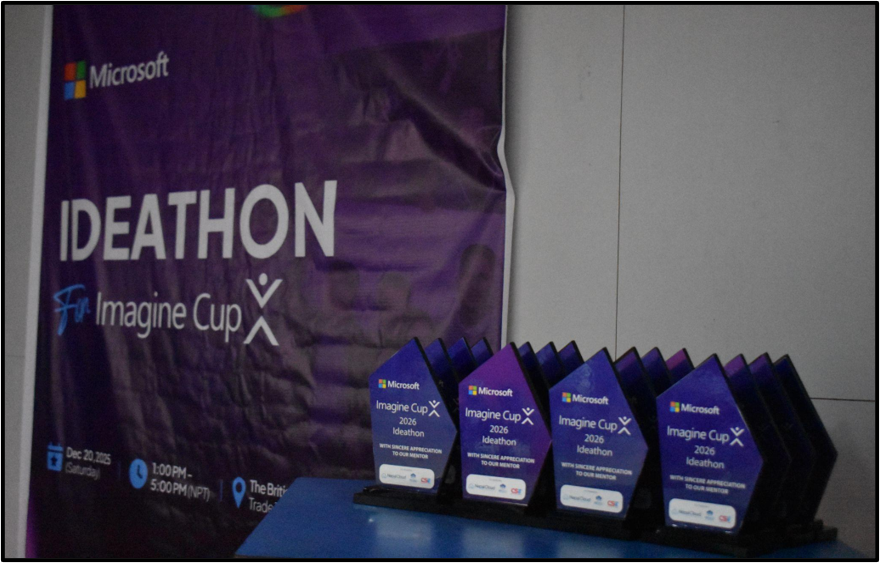
Thanks also to our partners: The British College as venue partner, and VivaSoft Nepal, .NET Hub Kathmandu, and Makura Creations for their support. The nine mentors who gave their time and expertise were recognized with tokens of appreciation, and CSITAN President Ms. Apekshya Basnet closed out the day with a heartfelt thank-you to everyone involved.
Why This Matters
Events like this aren’t just about one afternoon of brainstorming — they’re about building a pipeline. Eighty students walked away with a clearer picture of Azure, a sharper sense of how to turn an idea into something pitchable, and a real connection to the Imagine Cup’s global stage. That’s exactly the kind of momentum Nepal’s tech community needs to keep building toward the future.
If this is the energy student teams bring to a single afternoon, we can’t wait to see what they do with a full Imagine Cup cycle ahead of them.